
Yes, you may be able to file a claim after a Georgia Uber or Lyft accident during busy summer travel. The available claim depends on who caused the crash, the rideshare driver’s app status at the moment of impact, the insurance policies in effect, and the injuries and losses supported by the evidence.
Your claim may involve a rideshare company policy, the driver’s personal automobile policy, another driver’s liability policy, or uninsured or underinsured motorist coverage. Acting promptly can help preserve trip data, app records, surveillance video, witness information, vehicle data, and other evidence that may become harder to obtain with time.
The Keenan Law Firm handles automobile injury matters in Atlanta, Georgia, and can help passengers, rideshare drivers, motorists, cyclists, pedestrians, and authorized wrongful death claimants evaluate the available claims and insurance coverage.






Why Summer Rideshare Accidents Can Be More Complicated 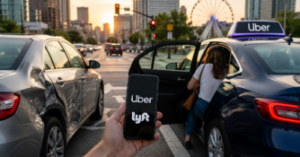
Summer travel often brings rideshare trips involving Hartsfield-Jackson Atlanta International Airport, Downtown Atlanta, Buckhead, hotels, event venues, and major routes such as I-75, I-85, and I-285. A driver may be dealing with airport pickup zones, navigation instructions, passenger messages, road construction, unfamiliar routes, and dense traffic during the same trip.
A summer rideshare collision may also involve:
- A passenger who lives outside Georgia
• A driver using a personal vehicle for rideshare trips
• Several insurance companies
• Medical treatment received in more than one state
• Hotel, airport, business, or traffic-camera video
• Digital records controlled by Uber, Lyft, or another company
• Witnesses who leave Georgia soon after the crash
These facts do not prevent a claim. They make early identification of the responsible parties, available policies, and evidence especially valuable.
Who May File a Georgia Uber or Lyft Accident Claim?
A claim may be available to more than the rideshare passenger. Depending on fault, injury, and legal standing, potential claimants may include:
- A passenger injured while entering, riding in, or leaving the rideshare vehicle
• An Uber or Lyft driver injured by another motorist
• A driver or passenger in another vehicle
• A pedestrian, cyclist, or motorcyclist struck by a rideshare vehicle
• A surviving spouse, child, parent, or estate representative authorized to pursue a wrongful death-related claim under Georgia law
Passengers often have a strong position on the fault question because they usually did not control either vehicle. An insurance company may still dispute whether the crash caused the injury, whether the treatment was related and necessary, how much the claim is worth, or which policy must respond.
Learn more about the firm’s work in serious roadway injury matters:
https://www.keenanlawfirm.com/atlanta-automobile-injury-attorneys/

Katherine Rinaldo


Matthew Powell

Don Truskett

Michael Strong
Driver App Status Can Determine Which Insurance Applies
The rideshare driver’s app status at the moment of impact is one of the first facts to confirm. Georgia regulates transportation network company insurance under O.C.G.A. § 33-1-24.
Georgia’s rideshare insurance statute:
https://law.justia.com/codes/georgia/title-33/chapter-1/section-33-1-24/
Driver Offline
When the driver is not logged into the rideshare app, the driver’s personal automobile policy generally applies. The policy terms, exclusions, endorsements, and the purpose of the trip still require review.
Driver Online and Waiting for a Request
When the driver is logged into the app but has not accepted a ride request, Georgia law requires primary automobile liability coverage of at least:
- $50,000 for bodily injury or death to one person
• $100,000 for bodily injury or death to two or more people in one accident
• $50,000 for property damage in one accident
The rideshare company’s policy may provide this coverage when the driver’s personal policy does not apply or does not provide the required amount.
Verdicts & Settlements
Ride Accepted or Passenger in the Vehicle
From the moment the driver accepts a ride request until the passenger exits the vehicle, Georgia law requires primary automobile liability coverage of at least $1 million for death, bodily injury, and property damage per occurrence.
Uber states that it maintains at least $1 million in third-party liability coverage while a driver is traveling to a pickup or completing a trip. The policy in force on the crash date, Georgia law, fault, and the exact app status control the final coverage analysis.
Uber’s current insurance information:
https://www.uber.com/us/en/drive/insurance/
The driver’s app status can change which policy applies and how much coverage may be available. Preserve the trip record before it disappears from easy view.
Do not rely only on a screenshot or an adjuster’s verbal statement. A careful review may require the trip receipt, app activity, dispatch information, driver records, insurance certificates, policy forms, endorsements, and formal coverage positions.
Who Could Be Responsible for Paying the Claim?
The rideshare driver is not always the only person who may be responsible. A Georgia Uber or Lyft accident claim may involve:
- The rideshare driver, if the driver was speeding, following too closely, making an unsafe turn, failing to yield, or driving while distracted
• Another motorist who caused or contributed to the collision
• A vehicle owner, depending on permission, agency, family-purpose, or negligent entrustment facts
• An employer whose worker caused the crash while acting within the scope of employment
• A manufacturer or repair business if a defective part or negligent service contributed to the collision
• An uninsured or underinsured motorist policy when the at-fault driver has no insurance or insufficient limits
A company-provided insurance policy does not automatically establish that Uber or Lyft is legally responsible for causing the collision. Direct claims against a rideshare company may require a separate analysis of company conduct, driver classification, agency, and Georgia law.
Learn how fault may be established in a Georgia car accident case:
https://www.keenanlawfirm.com/how-to-prove-fault-in-a-georgia-car-accident-case/
What Evidence Should You Preserve?
Rideshare cases often depend on records that may not exist in a standard two-vehicle collision. Save or request evidence as soon as practical, including:
- Screenshots showing the trip, route, fare, pickup location, destination, driver name, vehicle, and license plate
• App messages, call logs, receipts, emails, and safety reports
• Photographs and video of the vehicles, roadway, traffic signals, pickup area, luggage, and visible injuries
• The police report number and the name of the responding agency
• Names and contact information for passengers and witnesses
• Medical records, bills, prescriptions, work restrictions, and proof of lost income
• Dash-camera, hotel, airport, business, traffic-camera, and nearby property video
• Vehicle event data, GPS information, driver phone records, and app-status records
• Travel records showing interrupted flights, lodging changes, replacement transportation, or delayed return travel
Report the collision through the rideshare app, but keep the description factual and concise. Avoid guessing about speed, distance, diagnosis, or fault. Seek medical care when symptoms appear. Some symptoms develop or become clearer after the initial shock of a collision, and a delay in care may later become a disputed issue.
How Georgia Comparative Fault May Affect Recovery
Georgia follows a modified comparative fault rule under O.C.G.A. § 51-12-33. Your damages may be reduced by your percentage of fault. You generally cannot recover damages when you are 50 percent or more responsible.
Georgia’s comparative fault statute:
https://law.justia.com/codes/georgia/title-51/chapter-12/article-2/section-51-12-33/
A rideshare passenger is rarely accused of causing the driving error, but passenger conduct may become an issue in unusual circumstances. Drivers, cyclists, pedestrians, and occupants of other vehicles may face allegations that they were speeding, distracted, crossing improperly, or failing to use reasonable care.
Read more about Georgia comparative negligence:
What Compensation May Be Available?
Recoverable damages depend on the injuries, evidence, insurance coverage, and legal responsibility. A Georgia rideshare accident claim may seek compensation for:
- Emergency care, hospitalization, rehabilitation, medication, and future treatment
• Lost wages and reduced earning capacity
• Pain, suffering, disability, and loss of normal activities
• Scarring or disfigurement
• Damage to a vehicle, phone, luggage, or other property
• Transportation, lodging, and other reasonable accident-related expenses
• Funeral expenses and wrongful death damages when a collision is fatal
An early settlement offer may arrive before the full medical outlook is known. Signing a release usually ends the claim against the released parties. Future treatment needs, lost earning capacity, liens, and all available insurance coverage should be evaluated before a settlement is accepted.
Uninsured and underinsured motorist coverage may become valuable when another driver caused the crash but had no insurance or inadequate limits. Coverage may depend on several policies, exclusions, offsets, and notice requirements.
Read more about uninsured and underinsured motorist coverage in Georgia:
How Long Do You Have to File?
Georgia law generally requires a personal injury lawsuit to be filed within two years after the claim accrues under O.C.G.A. § 9-3-33.
Georgia’s general personal injury limitation statute:
https://law.justia.com/codes/georgia/title-9/chapter-3/article-2/section-9-3-33/
Different deadlines or notice rules may apply to property damage, wrongful death-related claims, government vehicles, minors, incapacitated people, and other special circumstances. The date for preserving a claim may also differ from the date for giving notice to an insurer or government entity.
The filing deadline is not the only reason to act promptly. Airport, hotel, business, and traffic video may be overwritten. App records may require a formal preservation request. Vehicles may be repaired, sold, or destroyed. Summer travelers and other witnesses may return home and become difficult to locate.
How an Atlanta Rideshare Accident Attorney Can Help
An attorney can help you identify potential defendants and insurance policies, preserve digital and physical evidence, obtain trip and app records, interview witnesses, review medical proof, address comparative fault allegations, and calculate present and future losses.
When liability or coverage is disputed, an attorney can also communicate with insurers, examine policy language, retain qualified experts when needed, and prepare the claim for negotiation or litigation.
Discuss Your Georgia Rideshare Accident
A summer Uber or Lyft crash can leave you managing medical appointments, missed work, travel disruptions, and several insurance companies at once. The Keenan Law Firm can review a serious rideshare accident in Atlanta or elsewhere in Georgia, explain which claims and policies may apply, and help you evaluate the next steps.
The firm prepares serious automobile injury matters through detailed investigation, evidence development, and case preparation tailored to the facts.
Call 404-523-2200 or visit:
https://www.keenanlawfirm.com/contact/
This article is for informational purposes only and is not legal advice. Consult an attorney about your specific situation.