August heat can contribute to tire deterioration, tread separation, and sudden blowouts, especially when a tire is underinflated, overloaded, aging, damaged, improperly repaired, or defective. Liability after a Georgia tire blowout crash may rest with a tire manufacturer, driver, vehicle owner, repair shop, retailer, trucking company, fleet operator, road contractor, government entity, or several parties.
The failed tire and wheel may be the most valuable evidence in your case. They should be preserved before a towing company, insurer, repair facility, or salvage yard repairs, sells, alters, or discards them. The Keenan Law Firm helps people in Atlanta, Georgia, and nearby areas evaluate serious automobile accidents and products liability claims involving tire failures and preventable roadway injuries.






Why August Heat Can Expose Tire Problems 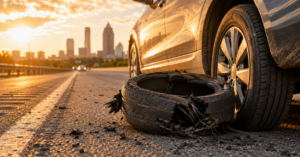
A tire heats up as it flexes against the road. Long trips, highway speeds, heavy cargo, low tire pressure, and high outdoor temperatures can increase that heat. The National Highway Traffic Safety Administration explains that sustained high temperatures can contribute to tire deterioration, blowouts, and tread separation. Underinflation can also create extra flexing and heat buildup inside a tire.
Heat alone does not prove that a tire was defective. It may expose an existing weakness, speed deterioration, or combine with poor maintenance, overloading, impact damage, or a defective condition. A proper investigation should examine the full history of the tire instead of blaming the weather alone.
An August failure may occur during an Atlanta commute on I-75, I-85, or I-285, a family trip across Georgia, or a delivery route involving repeated stops and heavy loads. The legal question is not merely whether the day was hot. The question is why the tire failed and whose product, decision, or conduct contributed to the crash.
Who May Be Liable for a Georgia Tire Blowout Accident?
Tire Manufacturer
A tire manufacturer may be liable when a tire contains a manufacturing defect, an unsafe design, or inadequate warnings or instructions. Possible problems may include weak bonding between tire components, contamination during production, improper materials, belt separation, or a design that creates unreasonable heat or stress during foreseeable use.
O.C.G.A. § 51-1-11 may allow a products liability claim against a manufacturer when a product was not merchantable and reasonably suited for its intended use and its condition when sold caused the injury. You still need evidence connecting the alleged defect to the tire failure and resulting harm.
Georgia law also includes a ten-year statute of repose for many manufacturer product claims, generally measured from the product’s first sale for use or consumption. Limited exceptions may apply. The tire identification number, date code, purchase records, and sales history may be critical to this deadline analysis.
You can learn more about defective product claims through the firm’s Atlanta products liability lawyers page.

Katherine Rinaldo


Matthew Powell

Don Truskett

Michael Strong
Driver or Vehicle Owner
A driver or vehicle owner may be responsible when poor tire care contributed to the blowout. Relevant conduct may include:
- Driving on visibly worn, cracked, bulging, or damaged tires
- Ignoring low-pressure warnings, vibration, pulling, or unusual noise
- Failing to replace an aging tire
- Overloading the vehicle
- Using the wrong tire size, speed rating, or load rating
- Continuing to drive after a hard impact with a pothole, curb, or roadway debris
- Failing to inspect a commercial vehicle or a vehicle used frequently for deliveries
You are not automatically negligent merely because a tire failed. Some defects are hidden and cannot be found during an ordinary visual inspection. Maintenance records, warning lights, photographs, witness statements, tire pressure data, and an expert inspection may help distinguish a hidden defect from poor maintenance.
Verdicts & Settlements
Repair Shop, Tire Dealer, or Service Technician
A repair shop, tire dealer, or technician may share responsibility if the business installed the wrong tire, mounted it incorrectly, damaged the bead, performed an unsafe repair, used an improper valve stem, failed to tighten wheel components properly, or returned the vehicle to service despite a known hazard.
Liability may also arise when a shop agreed to inspect a tire but missed a condition that a reasonably careful technician should have identified. The work order may show what you reported, what the shop inspected, which tire was installed, what repairs were completed, and whether replacement was recommended.
Trucking Company, Delivery Business, or Fleet Operator
Commercial vehicles often travel long distances, carry substantial loads, and operate on demanding schedules. A trucking company, delivery business, rental company, or fleet operator may be responsible for inadequate inspections, deferred maintenance, improper loading, poor recordkeeping, or pressure to keep an unsafe vehicle in service.
A commercial tire blowout claim may involve the driver, employer, maintenance contractor, tire manufacturer, cargo loader, leasing company, or vehicle owner. Driver inspection reports, load documents, maintenance files, electronic communications, and dispatch records may show how the unsafe condition developed.
Other Drivers and Secondary Collisions
A blowout can cause a vehicle to leave its lane, strike a barrier, roll over, or scatter tread into traffic. Another driver may contribute to the crash by speeding, following too closely, making an unsafe lane change, or reacting carelessly to roadway debris.
O.C.G.A. § 51-12-33 allows fault to be considered among people and entities that contributed to an injury. A tire blowout case may involve both the cause of the tire failure and the conduct of drivers during the seconds that followed.
Road Contractors or Government Entities
A deep pothole, exposed pavement edge, construction debris, defective work zone, or poorly maintained road may damage a tire or trigger a failure. A contractor may be responsible for unsafe work or debris. A city, county, or state agency may be involved when a public roadway condition caused or contributed to the crash.
Claims involving government entities may require written notice before a lawsuit and may have deadlines that differ from ordinary injury claims. The responsible agency, contractor, work history, prior complaints, and maintenance records should be identified promptly.
Evidence That Can Show Why the Tire Failed
Tire failure claims often depend on physical evidence. The failed tire, separated tread, wheel, valve stem, vehicle, and damaged components may require inspection by qualified experts.
Helpful evidence may include:
- The failed tire, wheel, valve stem, and all recovered tread pieces
- Photographs and video from the crash scene
- The tire identification number and date code
- Tire purchase, rotation, repair, alignment, and inspection records
- Tire pressure monitoring system warnings
- Vehicle event data and dashboard alerts
- Dash camera, surveillance, or traffic camera footage
- Tow yard, salvage yard, and repair facility records
- Witness accounts of noise, vibration, smoke, tread separation, or vehicle movement
- Recall notices, warranty records, and prior complaints involving the tire model
Preserve the failed tire, wheel, and tread pieces. Do not allow disposal, repair, sale, alteration, or destructive testing before the evidence can be inspected.
Tell the towing company, insurer, repair shop, and salvage yard in writing that the tire and vehicle must not be destroyed, repaired, sold, transferred, or released without advance notice. The firm’s guide to evidence preservation in Georgia car accident cases explains why early preservation can shape a claim.
What Should You Do After a Tire Blowout Crash?
Your safety and medical care come first. Move away from traffic when you can do so safely, call emergency services, and seek an evaluation for your injuries. A rollover or sudden impact may cause symptoms that are not fully apparent at the scene.
When possible:
- Photograph the tire, vehicle, roadway, debris, warning lights, and nearby construction
- Ask officers to document the apparent tire failure and locate separated tread
- Collect witness names and contact information
- Save towing, repair, tire purchase, and maintenance records
- Do not authorize disposal, repair, or destructive testing of the tire or vehicle
- Report the crash to the appropriate insurers
- Avoid signing a broad release before the cause of the crash and the extent of your damages are understood
- Keep damaged personal property and photograph visible injuries over time
The firm’s Atlanta automobile injury attorneys page provides more information about serious roadway injury claims.
Compensation and Insurance Issues
The damages available in a tire blowout claim depend on the evidence and the impact of your injuries. A claim may include:
- Medical expenses and future medical care
- Lost income and reduced earning capacity
- Pain and suffering
- Disability, scarring, or disfigurement
- Property damage and loss of use
- Other losses supported by the evidence
A fatal crash may support wrongful death and estate claims.
Insurance may come from several sources, including a driver’s liability policy, a commercial vehicle policy, a repair shop’s coverage, a manufacturer’s product liability coverage, or uninsured and underinsured motorist coverage. Policy terms, exclusions, notice duties, and coverage limits can affect the available recovery.
The firm’s page about uninsured and underinsured motorist coverage in Georgia car accidents explains one possible source of protection when available liability coverage is insufficient.
How Long Do You Have to Act?
O.C.G.A. § 9-3-33 generally provides two years to file a Georgia personal injury lawsuit. Different rules may apply to wrongful death, property damage, minors, government claims, loss of consortium, and other circumstances. A products liability claim may also be limited by the ten-year statute of repose in O.C.G.A. § 51-1-11.
A proper deadline analysis should account for the crash date, tire sale date, identity of each potential defendant, type of claim, and any rule that may shorten, extend, or pause a deadline.
Waiting can weaken your case before any formal deadline expires. Tires may be discarded, vehicles may be repaired, video may be overwritten, witnesses may become difficult to locate, and maintenance records may become harder to obtain.
How an Attorney Can Help
A tire failure claim may involve automobile negligence, products liability, commercial vehicle rules, insurance coverage, and roadway maintenance. An attorney can send preservation notices, arrange tire and crash reconstruction inspections, obtain maintenance and sales records, identify recalls, review insurance policies, investigate responsible parties, and document your losses.
When negotiation does not resolve the claim, trial preparation and demonstrative evidence may help explain a technical tire failure to a jury. The Keenan Law Firm emphasizes detailed case preparation and the use of qualified experts and demonstrative evidence when those tools fit the case.
Discuss a Georgia Tire Blowout Accident
A tire blowout can leave you facing medical treatment, missed work, vehicle loss, and uncertainty about who caused the crash. The Keenan Law Firm can review a serious tire failure accident in Atlanta or elsewhere in Georgia, work to preserve the tire and vehicle, identify potentially responsible parties, and explain the legal options supported by the evidence.
Call 404-523-2200 or visit the firm’s contact page to discuss your situation.
This article is for informational purposes only and is not legal advice. Every case is different. Consult an attorney about your specific situation.