The holiday season is one of the busiest times on the road, and unfortunately, it’s also a time when accidents are more likely to occur. Traffic congestion, weather changes, and distracted driving all contribute to an increase in accidents. When multiple vehicles are involved, determining fault becomes a more complicated process. In Georgia, the law applies a system called comparative fault, which divides responsibility among the parties involved in the accident based on their actions. Understanding how this system works is crucial, especially when you’re trying to recover compensation after a holiday week pileup.






What is Comparative Fault? 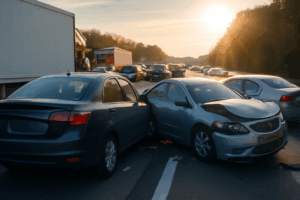
Georgia follows a comparative fault system when determining liability in accidents. This system is crucial in multi-car collisions, which are common during the holiday season. Under this system, fault is assigned in percentages based on each party’s contribution to the accident.
In simple terms, the idea is to allocate responsibility for the accident between the involved parties according to their degree of fault. If you’re found to be partially responsible for the crash, your compensation will be reduced by the percentage of fault assigned to you. For example, if you are 20% at fault and the total damages amount to $100,000, you will only be able to recover $80,000. However, if you are found to be more than 50% at fault, you cannot recover any damages.
Georgia’s comparative fault law is a modified comparative fault rule. This means that you can still recover damages if you are 50% or less responsible for the accident. However, your compensation will be reduced in proportion to your level of fault. If you are more than 50% responsible, you cannot recover damages.
Why Holiday Week Accidents Involve Multiple Cars
During the holiday weeks, the roads are more crowded, leading to an increase in the likelihood of accidents. Additionally, people are often in a hurry to travel or make it to family gatherings, which can lead to reckless driving behavior. On top of that, the weather during this time of year—rain, snow, or fog—can create hazardous driving conditions. All these factors combine to make holiday week accidents particularly dangerous and more likely to involve multiple cars.

Katherine Rinaldo


Matthew Powell

Don Truskett

Michael Strong
For example, imagine a multi-car accident on a congested highway, where one vehicle suddenly slams on the brakes due to an earlier collision. The drivers behind may not be able to react in time, causing a chain reaction. In these kinds of accidents, determining who is at fault requires examining the actions of each driver. Did one driver stop too abruptly, causing the others to crash into them? Were the other drivers following too closely? Were the weather conditions a significant contributing factor?
When several cars are involved, each driver’s behavior leading up to the accident must be assessed. This is where comparative fault comes into play, as each driver’s percentage of responsibility will impact their ability to recover damages.
How Fault is Determined in Multi-Vehicle Accidents
In a multi-vehicle accident, law enforcement and insurance companies will work together to determine who is at fault and to what degree. Several factors are considered during this process, including:
- Witness statements: Eyewitnesses often provide valuable information about what happened and the order in which the accident occurred. These statements can help establish who was at fault and why.
- Traffic camera footage: In some areas, traffic cameras record incidents as they happen. These cameras can provide crucial evidence about the sequence of events during the accident.
- Police reports: Officers investigating the scene will create a report that outlines their findings. The police report can provide insight into whether traffic laws were violated, if speeding was involved, or if one driver acted recklessly.
- Insurance companies: Both insurance companies will conduct their own investigations and may use police reports, witness testimony, and physical evidence to determine liability. Insurance adjusters are responsible for assessing each driver’s fault and determining what compensation is appropriate.
When multiple drivers are involved, each driver’s level of fault must be carefully assessed. If one driver failed to stop at a red light, that driver may bear a larger percentage of the responsibility for the crash. On the other hand, a driver who was rear-ended by another vehicle may only be partially at fault, depending on whether they had enough time to stop or avoid the collision.
Verdicts & Settlements
How Does Comparative Fault Affect Compensation?
Once fault is determined, Georgia’s modified comparative fault rule applies to the compensation process. In multi-car accidents, each driver’s damages will be reduced based on their level of fault. This means that even if you are partially responsible for the accident, you can still seek compensation for your injuries and damages.
However, your compensation will be reduced by the percentage of fault assigned to you. For example, if the total damages are $200,000, and you are determined to be 30% at fault, your compensation will be reduced to $140,000.
It’s also important to note that if you are found to be more than 50% responsible for the crash, you will not be eligible for compensation. This is one of the key features of Georgia’s modified comparative fault system.
What to Do After a Holiday Week Pileup
If you are involved in a multi-car accident during the holiday season, it’s essential to take certain steps to protect your rights and ensure that you are compensated for your damages:
- Call the police: Always report the accident to the authorities. A police report is crucial when determining fault in a multi-car crash. It also provides a record of the accident that can be used in insurance claims or legal proceedings.
- Take photos of the scene: If it is safe to do so, take photos of the accident scene, including the damage to all involved vehicles, skid marks, and the surrounding area. This evidence can help establish the sequence of events and prove fault.
- Seek medical attention: Even if you don’t feel injured, it’s important to get checked out by a medical professional after a car accident. Some injuries, such as whiplash, may not show symptoms immediately but can worsen over time.
- Contact an experienced attorney: A lawyer who specializes in car accidents can help you navigate the claims process, negotiate with insurance companies, and ensure that your rights are protected. A skilled attorney can also help you gather evidence and advocate for your best interests.
The Role of an Attorney in Multi-Vehicle Accidents
When multiple vehicles are involved in an accident, determining who is at fault and recovering compensation can become complicated. A Georgia car accident attorney can be invaluable in such cases. They can:
- Investigate the accident: An attorney will gather evidence, such as police reports, witness statements, and traffic camera footage, to determine who was at fault.
- Negotiate with insurance companies: Insurance companies are often motivated to minimize payouts. An experienced attorney can advocate for you and negotiate a fair settlement.
- Represent you in court: If the case goes to trial, a lawyer will represent you and fight for the maximum compensation you deserve.
Holiday week accidents involving multiple cars can lead to complex legal battles, especially when comparative fault is involved. Having legal representation ensures that you are not unfairly held responsible for damages and helps you navigate the legal process with confidence.
Understanding comparative fault and how it applies in multi-vehicle accidents is essential for anyone involved in a holiday week pileup. Even if you are partially at fault, you still have the right to seek compensation for your damages. However, your compensation will be reduced based on your level of fault. It’s crucial to take the necessary steps after an accident, including calling the police, documenting the scene, seeking medical attention, and consulting an experienced attorney.
By understanding how comparative fault works and working with a skilled lawyer, you can ensure that you are fairly compensated for your injuries and damages. The Keenan Law Firm is here to help if you’ve been involved in a holiday week pileup or any other multi-vehicle accident. We will fight for your rights and help you get the compensation you deserve.